Crochet Hook Sizes and Yarn Weights Explained (With a Chart)
A plain-English guide to crochet hook sizes, US letters vs millimeters, yarn weights 0 to 7, and how to match the right hook to your yarn.
Hook sizes and yarn weights are the first confusing thing every new crocheter runs into. Patterns say “H-8” or “5 mm”, yarn labels show a little numbered ball of yarn, and nobody explains how they fit together.
The short version: thicker yarn needs a bigger hook. Everything else in this guide is detail on that one rule, plus a chart you can come back to whenever you start a new project.
How crochet hooks are sized
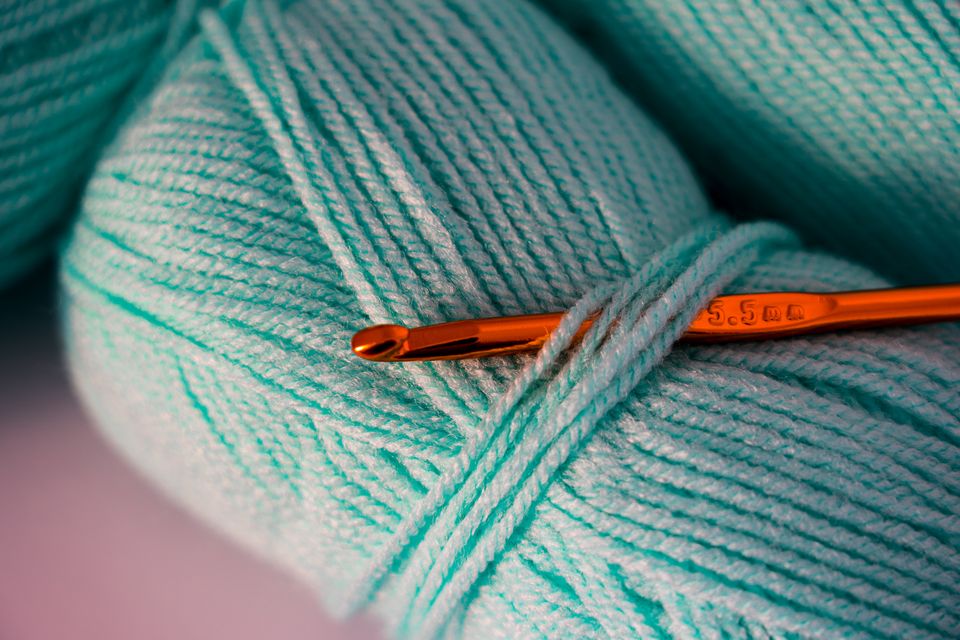
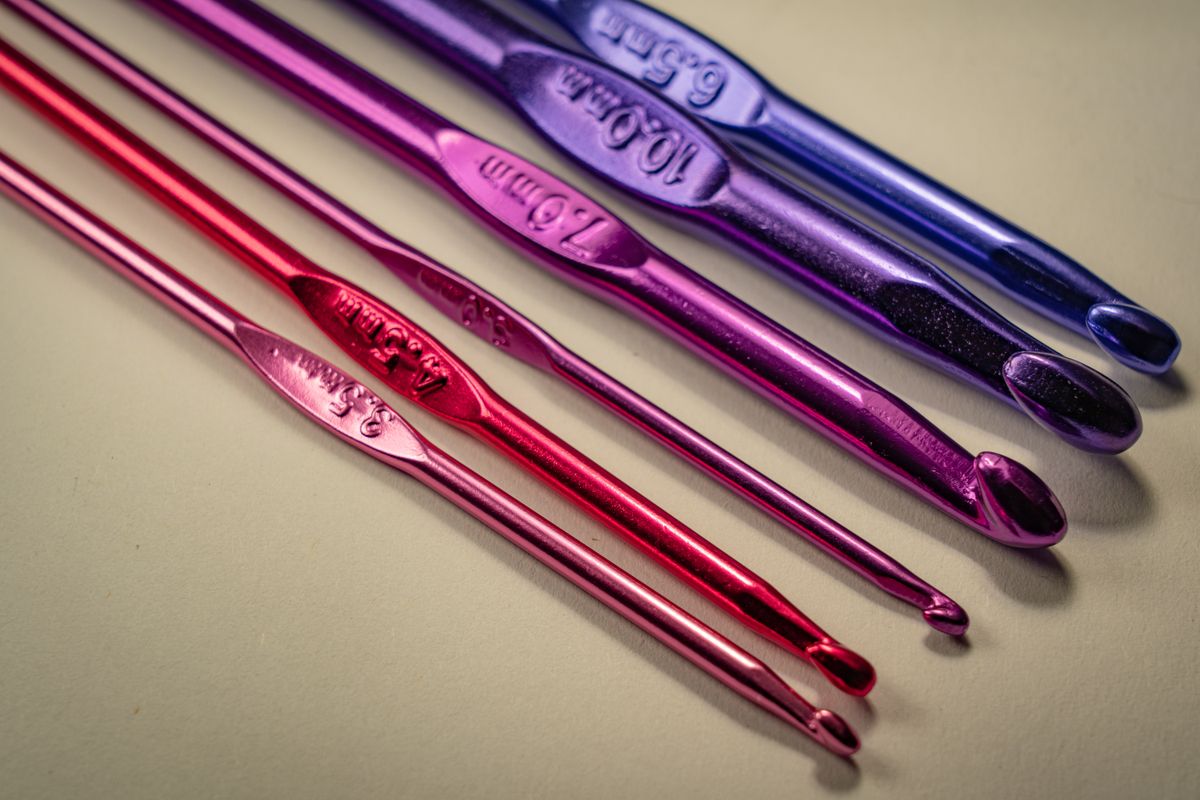
Every hook has a size printed on the handle or the flat thumb rest. You’ll usually see two things:
- A millimeter size, like 5 mm. This is the diameter of the shaft, the part that sets the size of your loops. It’s the universal measurement.
- A US letter and number, like H-8. These are traditional labels used in the United States.
Because the letters vary a little from brand to brand, the millimeter size is the one to trust. If a pattern says “H-8 (5 mm)”, reach for the 5 mm hook.
US hook sizes to millimeters
| US size | Millimeters | Typical yarn |
|---|---|---|
| B-1 | 2.25 mm | Super fine / sock |
| C-2 | 2.75 mm | Super fine |
| D-3 | 3.25 mm | Fine |
| E-4 | 3.5 mm | Fine / sport |
| F-5 | 3.75 mm | Sport / DK |
| G-6 | 4 mm | DK |
| 7 | 4.5 mm | DK / light worsted |
| H-8 | 5 mm | Worsted |
| I-9 | 5.5 mm | Worsted |
| J-10 | 6 mm | Worsted / aran |
| K-10.5 | 6.5 mm | Bulky |
| L-11 | 8 mm | Bulky |
| M/N-13 | 9 mm | Bulky / super bulky |
| N/P-15 | 10 mm | Super bulky |
There are also tiny steel hooks (under 2 mm) for crochet thread and lace, and huge jumbo hooks (15 mm and up) for chunky blankets.
Yarn weights from 0 to 7
“Weight” means how thick the yarn is, not how heavy the ball is. Most yarn labels use the standard system from the Craft Yarn Council, shown as a number inside a small yarn ball symbol.
| Weight | Name | Also called | Suggested hook |
|---|---|---|---|
| 0 | Lace | Thread, cobweb | Steel hooks to 2.25 mm |
| 1 | Super fine | Sock, fingering, baby | 2.25 to 3.5 mm |
| 2 | Fine | Sport, baby | 3.5 to 4.5 mm |
| 3 | Light | DK, light worsted | 4.5 to 5.5 mm |
| 4 | Medium | Worsted, aran, afghan | 5.5 to 6.5 mm |
| 5 | Bulky | Chunky, craft, rug | 6.5 to 9 mm |
| 6 | Super bulky | Super chunky, roving | 9 to 15 mm |
| 7 | Jumbo | Jumbo, roving | 15 mm and larger |
These are starting points, not rules. Many designers use a 5 mm hook with worsted weight yarn because it gives a slightly firmer fabric than the 5.5 to 6.5 mm the chart suggests.
How to choose the right hook for your yarn
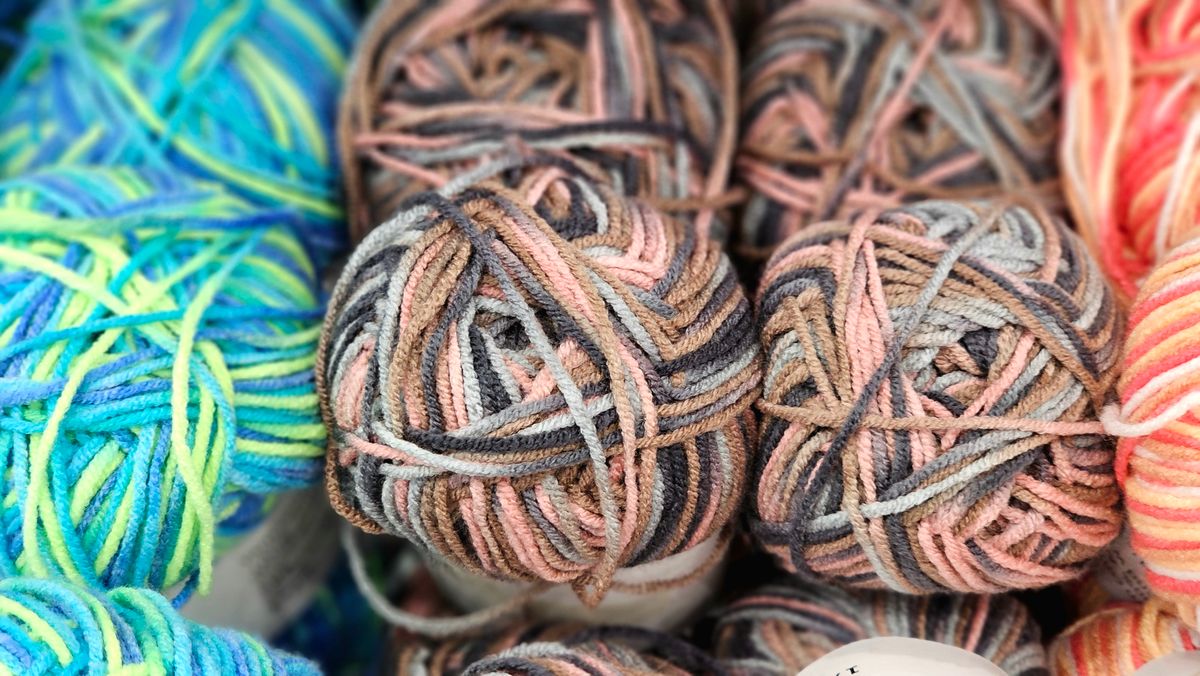
1. Start with the yarn label
Almost every yarn band lists a recommended hook size, often next to a small hook symbol. That’s your default.
2. Check the pattern
If you’re following a pattern, use the hook it calls for, then adjust if your gauge is off (more on that below).
3. Think about the fabric you want
The same yarn can make very different fabric depending on the hook:
- Go down a size or two for a stiff, dense fabric with no gaps. This is what you want for baskets, plant pot covers and amigurumi, where stuffing or the pot shouldn’t show through.
- Use the label size for everyday projects like dishcloths, bags and cushion covers.
- Go up a size or two for soft, drapey fabric: scarves, shawls and lightweight throws.
What gauge is, and when it matters
Gauge is the number of stitches and rows in a measured square, usually 4 x 4 inches (10 x 10 cm). Patterns list it so your project comes out the size the designer intended.
Gauge matters a lot for anything that has to fit (hats, sweaters, a pot cover for a specific pot). It barely matters for dishcloths, blankets and wall hangings, where a slightly bigger or smaller result is fine.
To check gauge, crochet a swatch a bit bigger than 4 inches in the pattern stitch, lay it flat and count:
- Too many stitches? Your stitches are small. Switch to a bigger hook.
- Too few stitches? Your stitches are large. Switch to a smaller hook.
Types of crochet hooks
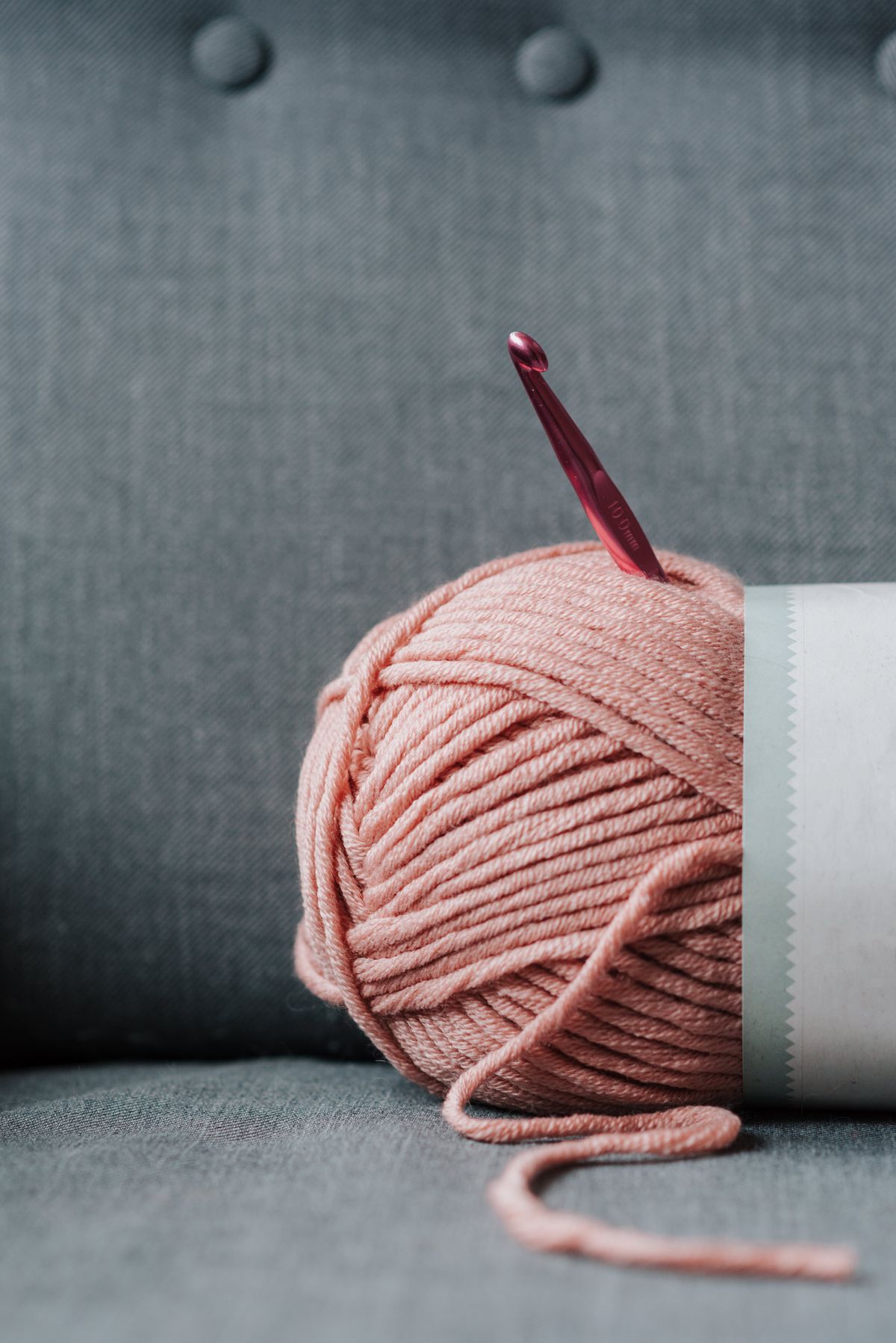
Inline vs tapered. On an inline hook, the head is the same width as the shaft and the throat is a straight cut. On a tapered hook, the head is slightly rounder and sticks out, and the throat narrows. Try both. People usually have a strong preference, and it’s purely about feel.
Materials:
- Aluminum: smooth, inexpensive and fast. The classic beginner hook.
- Ergonomic handles: rubber or silicone grips that spread pressure across your hand. Worth it if your hand gets tired or sore.
- Wood and bamboo: warm and slightly grippy, good with slippery yarns like silk or bamboo blends.
- Plastic: light, common in very large sizes for chunky yarn.
- Steel: small sizes for thread and lace.
A simple starter kit
If you’re building a kit from scratch, you don’t need every size. A 3.5 mm, 4 mm, 5 mm and 6 mm hook will cover most beginner patterns in sport, DK and worsted yarn. Add an 8 or 9 mm for chunky decor projects like baskets and cushion covers.
Quick reference for home decor projects
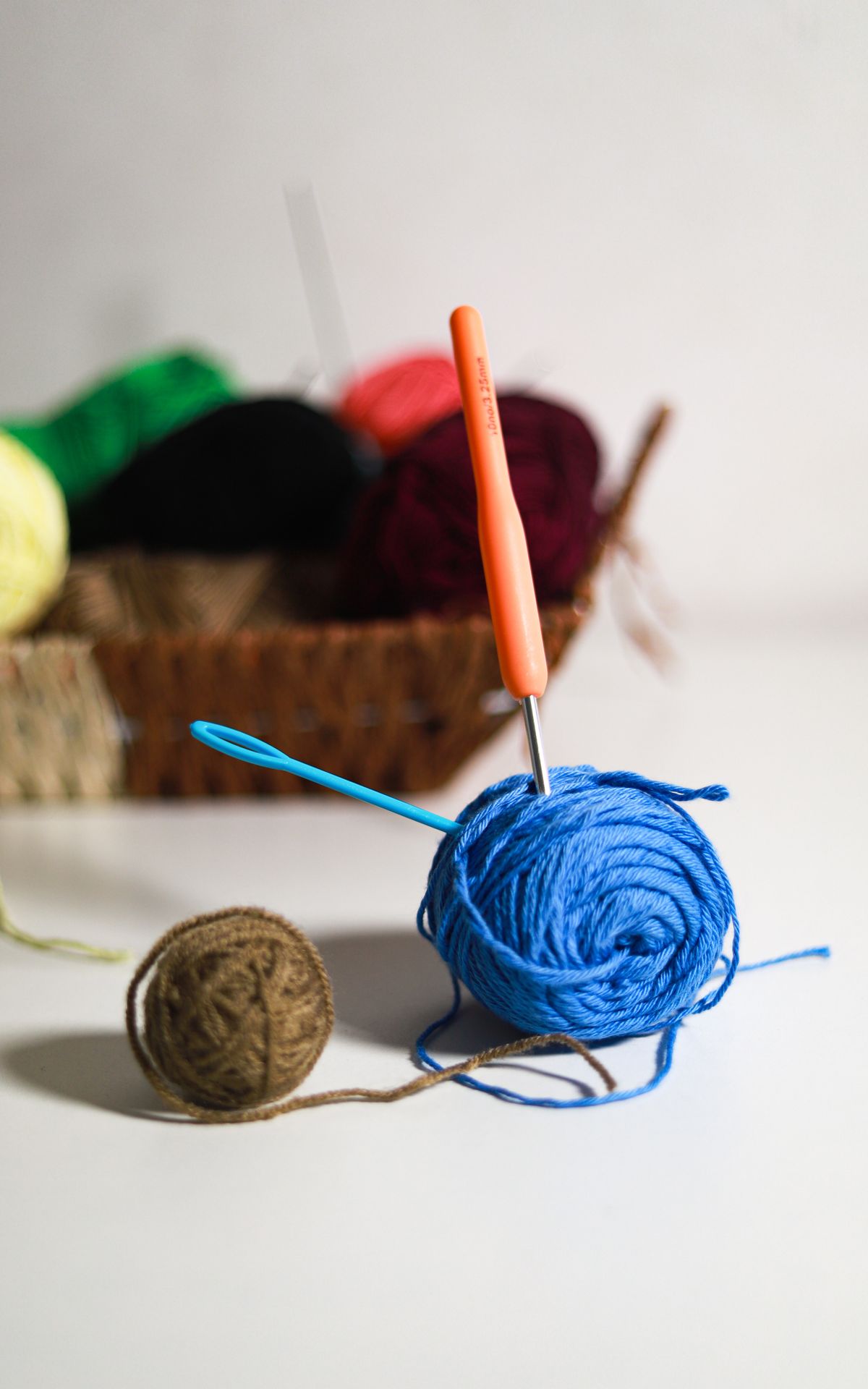
- Plant pot covers and baskets: worsted or bulky yarn, one size smaller than the label for a firm fabric
- Plant hangers: cotton cord or bulky cotton, 6 to 9 mm
- Cushion covers: worsted or bulky, label size
- Throws and blankets: worsted to super bulky, label size or one up
- Coasters: worsted cotton, 4.5 to 5 mm
New to all of this? Start with our how to crochet for beginners guide, then pick a project from our easy crochet projects for beginners.
Worth buying
If you're building a basic crochet kit, these cover almost every beginner and intermediate pattern.
-
Ergonomic hook set, 3.5 mm to 6.5 mmBest first set
Covers sport through worsted and light bulky yarn. Soft handles are worth it if you crochet for more than half an hour at a time.
-
Single 8 mm or 9 mm hook
For chunky blankets, baskets and quick cushion covers in bulky yarn.
-
Hook and needle size gauge
A small card with holes that tells you the size of unlabeled or vintage hooks.
-
A zippered hook case
Keeps sizes in order and stops hooks disappearing into the sofa.
Frequently asked questions
What crochet hook size is most common?
The 5 mm (US H-8) hook is probably the most used size, because it pairs with worsted weight yarn, the most common yarn for blankets, dishcloths and home decor.
Should I trust the millimeter size or the letter?
Always trust the millimeter size. Letters and numbers vary slightly between brands and countries, but 5 mm is 5 mm everywhere.
What happens if I use a bigger hook than the yarn label says?
Your fabric becomes looser, softer and more drapey, and the project grows larger. That can be nice for shawls and scarves, but baskets and amigurumi need a smaller hook for a firm fabric.
What is the difference between inline and tapered hooks?
On an inline hook the head is the same width as the shaft and the throat is cut straight in. On a tapered hook the head sticks out a little and the throat narrows. Neither is better: it's about which feels smoother in your hands.
What do the numbers on a yarn label mean?
The number in the small yarn ball symbol is the standard weight category from the Craft Yarn Council, from 0 (lace) to 7 (jumbo). The label also usually lists a recommended hook size and gauge.
Photo credits
Thank you to Castorly Stock, Muhammad Khawar Nazir, Anete Lusina and M Kamran Arvi for sharing these photographs.