Pothos Care Guide: Light, Watering and Fixing Yellow Leaves
Everything you need to keep a pothos happy: how much light it needs, when to water, why leaves turn yellow, and how to grow a fuller plant from cuttings.
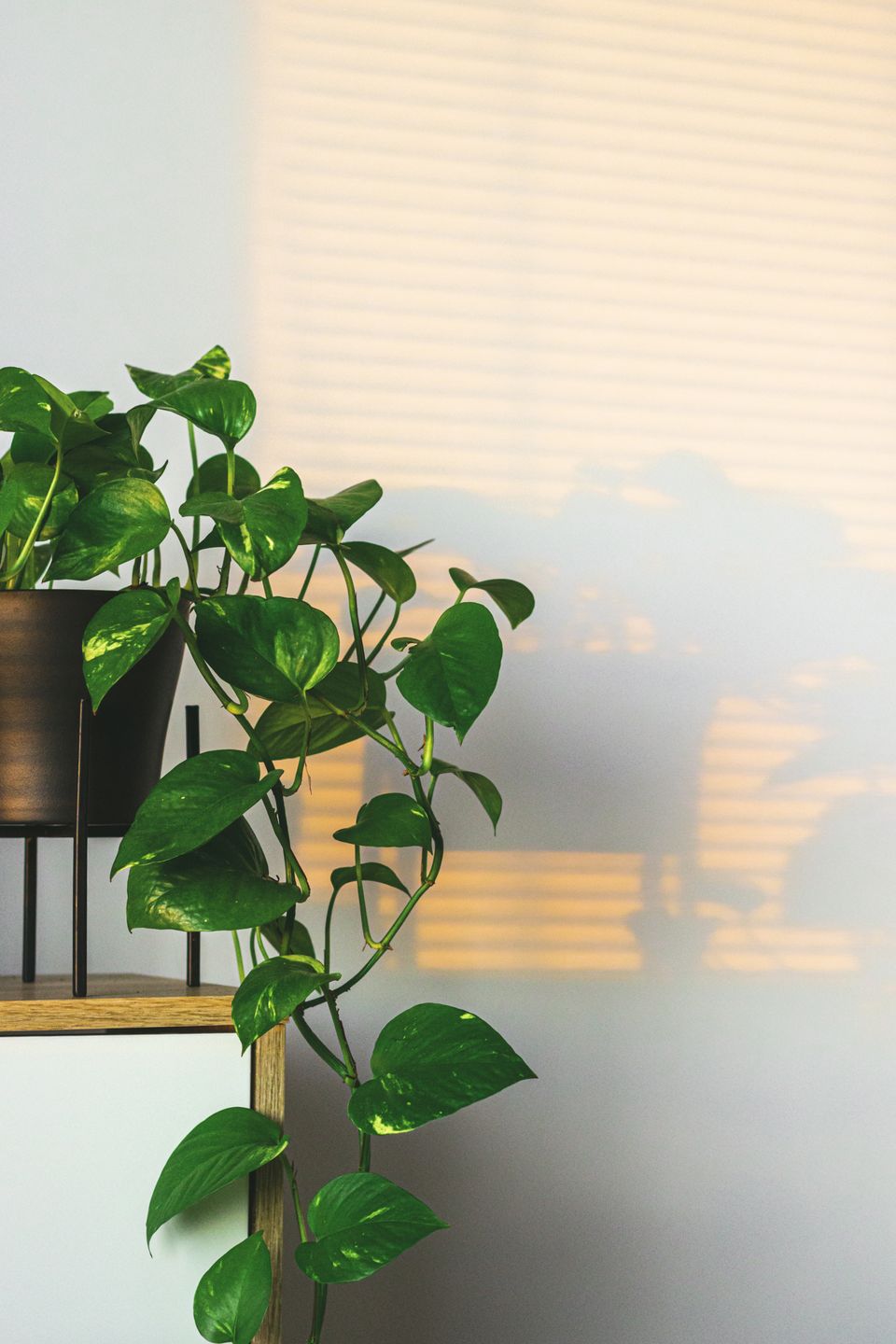
If there’s one houseplant that forgives almost everything, it’s pothos. It grows in bright rooms and dim ones, bounces back after you forget to water it, and trails beautifully from a shelf or a hanging planter. That’s why it’s the plant we recommend most often to beginners.
But “easy” doesn’t mean “no care at all”. Here’s exactly what a pothos needs, what the common problems mean, and how to turn one straggly plant into a full, bushy one.

Meet the pothos
Pothos (Epipremnum aureum) is a tropical climbing vine. In the wild it scrambles up trees; indoors it trails or climbs whatever you give it. You’ll also see it called devil’s ivy, because it’s so hard to kill and stays green even in low light.
Popular varieties include:
- Golden pothos: green leaves streaked with yellow. The classic, and the toughest.
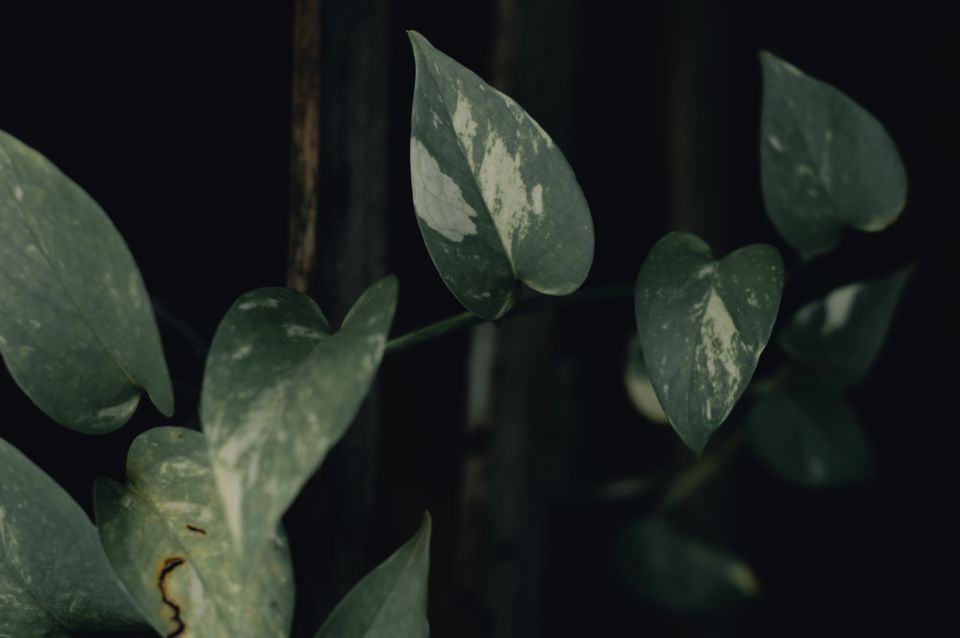
- Marble Queen: heavily marbled with cream and white. Grows slower and wants more light.
- Neon: bright chartreuse leaves that glow in a dark corner.
- Pearls and Jade, N’Joy and Manjula: compact varieties with crisp white and green patterns.
Two plants often sold as pothos aren’t true Epipremnum aureum: satin pothos is Scindapsus pictus, and Cebu Blue is Epipremnum pinnatum. Their care is very similar, though.
Light: bright and indirect is best
Pothos does best in bright, indirect light: near a window, but not in strong direct sun that hits the leaves for hours. A spot a few feet back from an east or west window, or anywhere in a bright room, is perfect.
It’s famous for tolerating low light, and it will survive in a dim hallway. Just know what to expect:
- Growth slows down a lot
- Variegated types lose their pattern and turn plain green
- Vines get leggy, with long bare gaps between leaves
Strong direct sun is the opposite problem: it can bleach or scorch the leaves, leaving pale or brown patches.
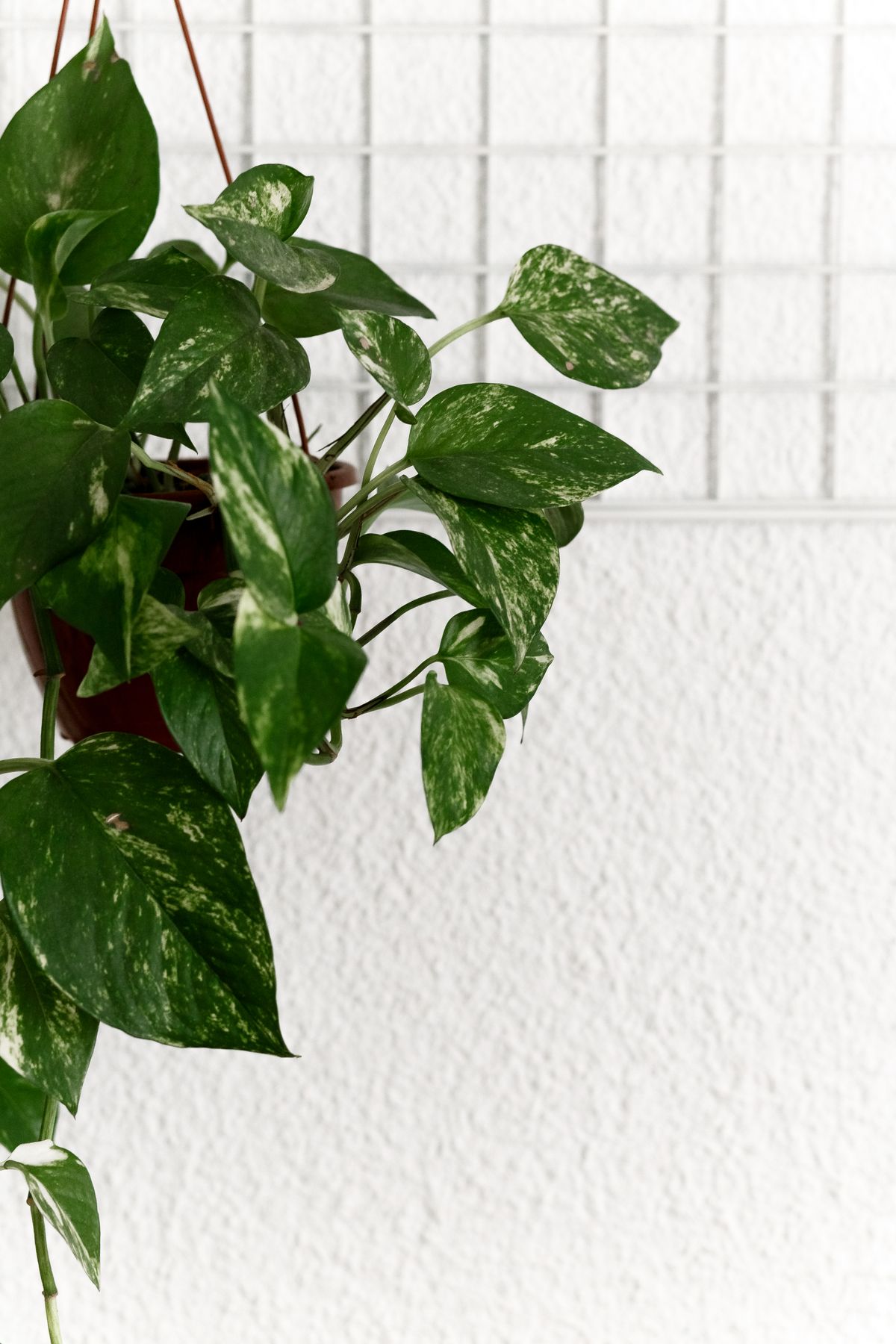
Watering: let it dry out a little
More pothos die from too much water than too little. The simple rule: water when the top 1 to 2 inches of soil are dry. Push a finger into the soil to check.
In most homes that’s roughly every 1 to 2 weeks in spring and summer, and less often in winter. When you water, water thoroughly until it runs out of the drainage hole, then empty the saucer or cover pot so the roots aren’t standing in water.
Signs you’ve got watering wrong:
- Drooping, soft leaves and dry soil: thirsty. Water deeply and it will perk up within a day.
- Yellow leaves and damp soil: too much water. Let it dry out before watering again.
- Black, mushy stems at the soil line: root rot from constant wet soil. Act quickly (see below).
Soil, pots and feeding
Use any well-draining indoor potting mix. If yours feels heavy and stays wet for a long time, mix in a handful of perlite. The pot must have a drainage hole. If you love a pot without one, use it as a decorative cover and keep the plant in a plastic nursery pot inside it.
Feed with a balanced liquid houseplant fertilizer about once a month in spring and summer, diluted to half strength. Skip feeding in winter, when growth slows.
Repot when roots circle the bottom of the pot or poke out of the drainage hole, usually every 1 to 2 years. Go up just one pot size, about 2 inches wider.
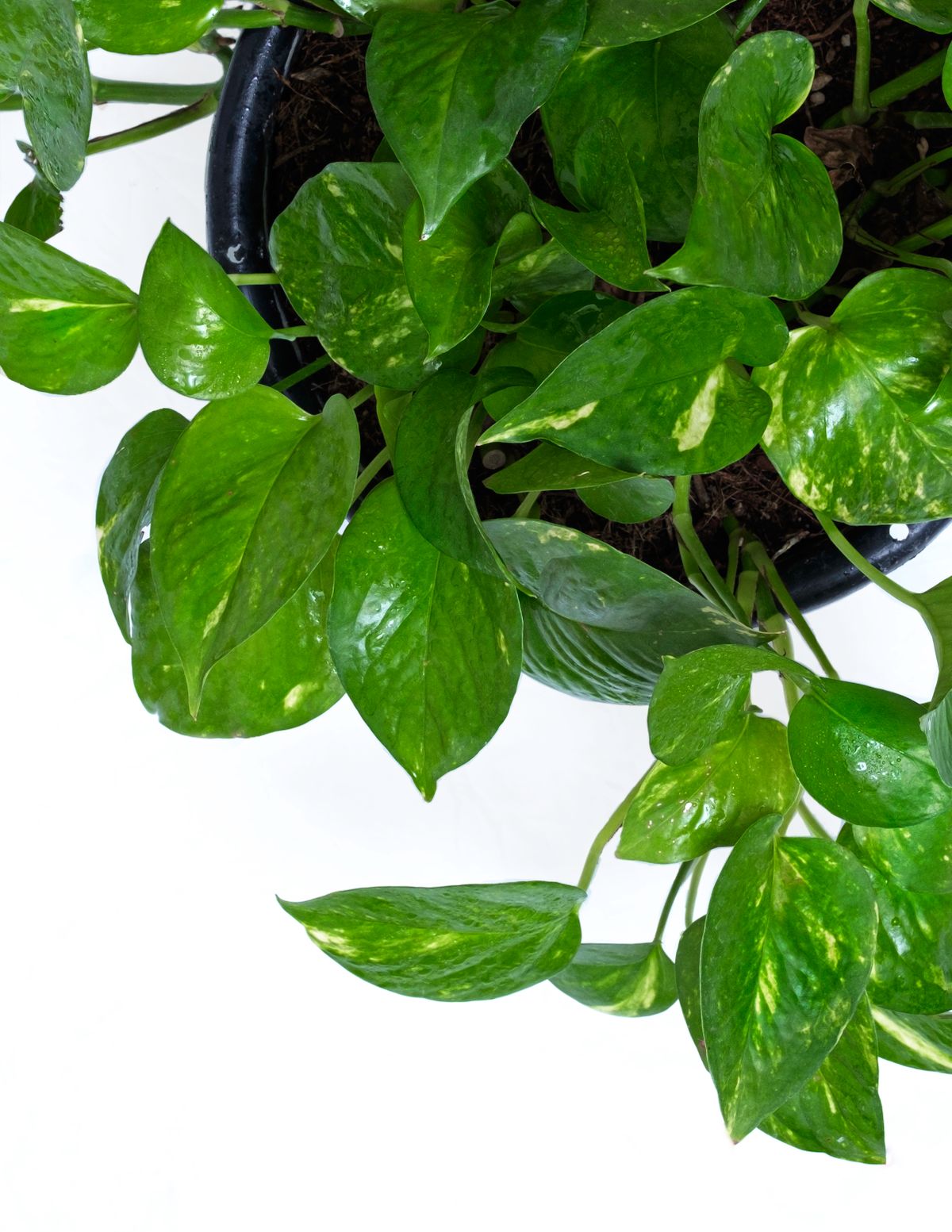
Common pothos problems and what they mean
Yellow leaves. One old leaf near the base yellowing occasionally is normal. Several at once usually means overwatering. Less often, it can be from very low light or a sudden move.
Brown, crispy edges or tips. Usually underwatering or very dry air near a heater. Water more consistently.
Leggy vines with tiny leaves. Not enough light. Move it somewhere brighter and prune the bare stems.
Losing variegation. Again, light. Variegated leaves need brighter light to keep their pattern.
Root rot. If stems are mushy and the soil smells bad, take the plant out of the pot, cut off any brown, soft roots, and repot healthy pieces in fresh, dry mix. Take a few cuttings as backup in case the main plant doesn’t recover.
Pests. Pothos is fairly pest-resistant, but check under leaves now and then for mealybugs (white fluff) or spider mites (fine webbing). Wipe leaves with a damp cloth and treat with insecticidal soap if needed.
How to propagate pothos (and get a fuller plant)
Pothos is one of the easiest plants to propagate, and it’s how you make a thin plant look lush.
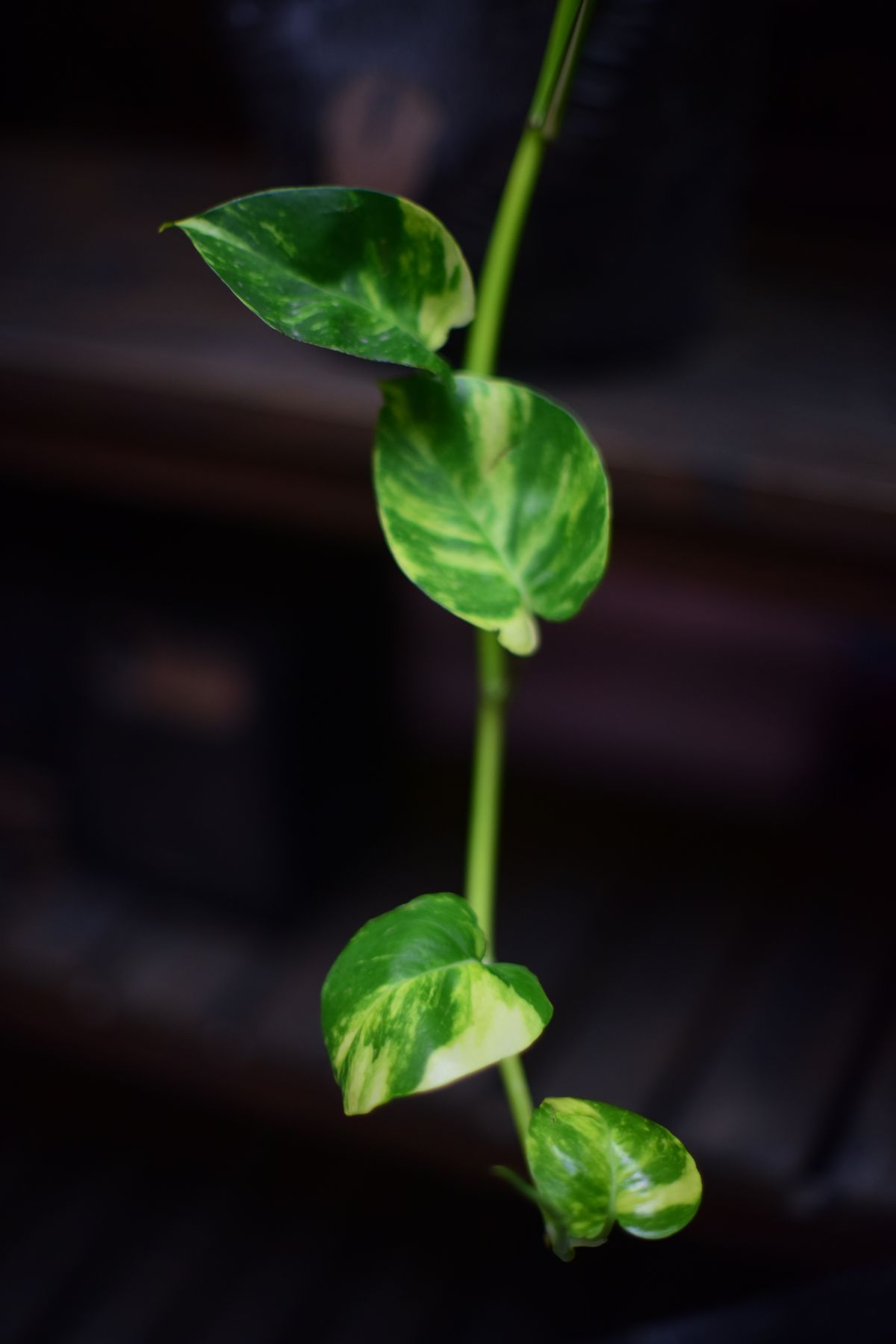
- Find a node. A node is the small bump on the stem where a leaf joins it. Roots grow from nodes.
- Cut a piece of vine with 2 to 4 leaves, cutting just below a node.
- Remove the bottom leaf so the node sits bare.
- Place it in water in a clear glass, with the node underwater and leaves above. Put it in bright, indirect light.
- Change the water every week or so. Roots usually appear within a few weeks.
- Plant the cuttings once the roots are a couple of inches long, ideally back into the original pot to fill it out.
Pothos and pets
Pothos is toxic to cats and dogs according to the ASPCA. Chewing the leaves releases calcium oxalate crystals that irritate the mouth and throat and can cause drooling and vomiting. If you share your home with a curious pet, grow it on a high shelf or in a hanging planter, or choose one of our pet-safe houseplants instead.
How to style a pothos
Pothos is made for trailing, which makes it one of the best plants for cozy, layered rooms:
- Let it spill over the edge of a bookshelf or the top of a kitchen cabinet
- Hang it in a crochet or macrame plant hanger near a bright window
- Train vines along a shelf with small adhesive hooks for a living garland
For more ideas, see our guides to styling plants on shelves and hanging plant ideas. And if you’re still building your collection, start with our easy indoor plants for beginners.
Worth buying for a happy pothos
-
Nursery pot with drainage + a decorative cover potMost useful
Keep the plant in its plastic pot and drop it inside a prettier one. Easy to water, no soggy roots.
-
Indoor potting mix with perlite
Drains fast so roots don't sit in water.
-
Long-spout watering can
Gets water to the soil under trailing vines without splashing leaves.
-
Clear glass propagation vases
Makes rooting cuttings in water easy and lets you watch the roots grow.
-
Adhesive wall hooks or a ceiling hook
For training vines along a shelf or hanging the plant out of pets' reach.
Frequently asked questions
How often should I water a pothos?
Water when the top 1 to 2 inches of soil feel dry, which is usually every 1 to 2 weeks indoors. In winter, or in low light, it may need water only every 2 to 3 weeks. Always check the soil instead of following a fixed schedule.
Can pothos live in a room with no windows?
Not long-term in total darkness. Pothos tolerates low light well and can live under bright artificial light such as an LED grow bulb or office lights left on during the day, but it needs some light source to survive.
Why are my pothos leaves turning yellow?
The most common cause is overwatering, especially if several leaves yellow at once and the soil stays damp. One older leaf yellowing now and then is normal aging. Let the soil dry out more between waterings and make sure the pot drains.
Is pothos toxic to cats and dogs?
Yes. The ASPCA lists pothos as toxic to cats and dogs. It contains insoluble calcium oxalate crystals, which irritate the mouth and can cause drooling, vomiting and difficulty swallowing if chewed. Keep it out of reach or choose a pet-safe plant.
How do I make my pothos fuller?
Prune long vines just after a leaf node, root the cuttings in water, and plant them back into the same pot. Brighter indirect light also encourages bigger leaves and shorter gaps between them.
Photo credits
Thank you to Ja Kubislav, Daniel Maurício Bertoli, Nataliya Vaitkevich, umberto dez and Sóc Năng Động for sharing these photographs.